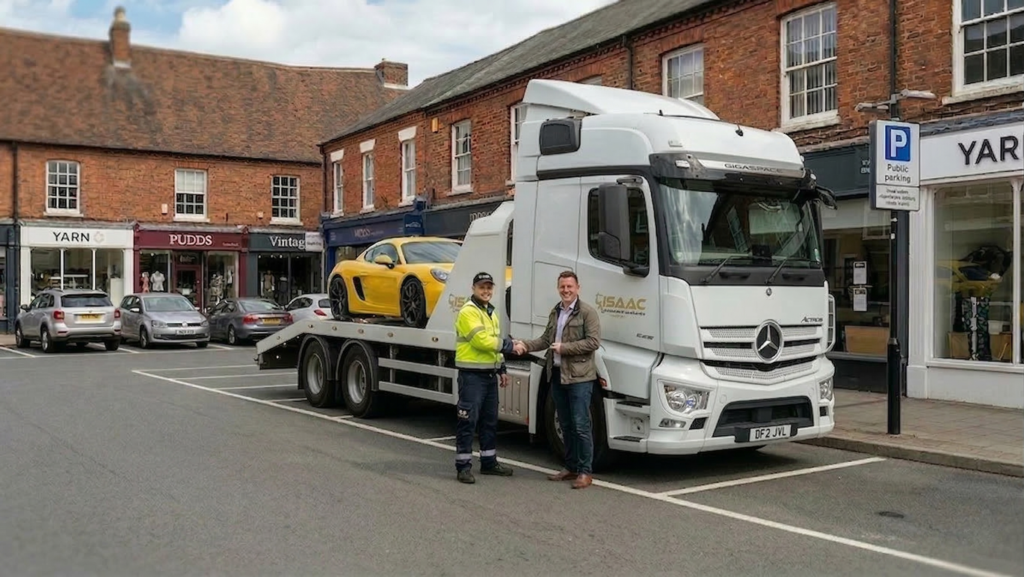
We often see them as a blur of flashing amber lights as we speed past a stranded motorist. We curse them when they block the fast lane during a contraflow system. But how often do we actually think about the person behind the wheel of the recovery truck?
In an industry facing a severe skills shortage, the UK’s recovery operators are working harder than ever. To understand the reality of the job, you have to look past the mechanics and look at the mental toll.
The 4 AM Start
Most people think breakdowns happen during the evening rush hour. In reality, the recovery driver’s day often starts in the pitch black. “The 4 AM call-outs are the worst,” says Dave, a veteran operator for a independent firm in the Midlands. “It’s freezing, you haven’t had a coffee yet, and you’re dragging a sales rep’s car out of a ditch because he hit a patch of black ice on the way to the airport.”
The Emotional Support
Modern recovery training now emphasizes “customer care” almost as much as technical knowledge. When a driver arrives at a scene, the customer is often in a state of panic, especially if they have children in the car.
“You become a therapist, a travel agent, and a mechanic all at once,” Dave explains. “I had a woman last week whose car died on the M62. She was on her way to see her mum in hospital. She wasn’t worried about the car; she was worried about missing visiting hours. I ended up calling her a taxi on my personal phone while I waited for the traffic officers to show up.”
The “EV Anxiety” for Operators
We talk about “range anxiety” for EV drivers, but there is a growing anxiety among recovery drivers regarding Electric Vehicles. It isn’t just about towing them; it’s about safety. A damaged lithium-ion battery can undergo “thermal runaway”—a chain reaction of fires that is incredibly difficult to extinguish.
“We have to treat every crashed EV like it’s a bomb,” says Dave. “We have to isolate the HV (High Voltage) system, sometimes physically cut cables, and if the battery is smoking, we have to drag the car away from buildings and other vehicles and just let it burn out under supervision. It’s a whole new world.”
The Courtesy Wave
Despite the long hours (often 12-14 hour shifts) and the danger of working inches away from high-speed traffic, the majority of operators love the job. There is a unique camaraderie on the hard shoulder.
“The best part is the wave,” Dave smiles. “Not from the customer we’re picking up—they’re usually just relieved. The best wave is from the truck driver who flashes his hazards to say thanks for clearing the lane, or the motorist who gives you a thumbs up because you’ve just cleared a shredded tyre off the road before it could hit their car.”
So next time you see a recovery truck, give them space. They are the unsung guardians of the tarmac.